
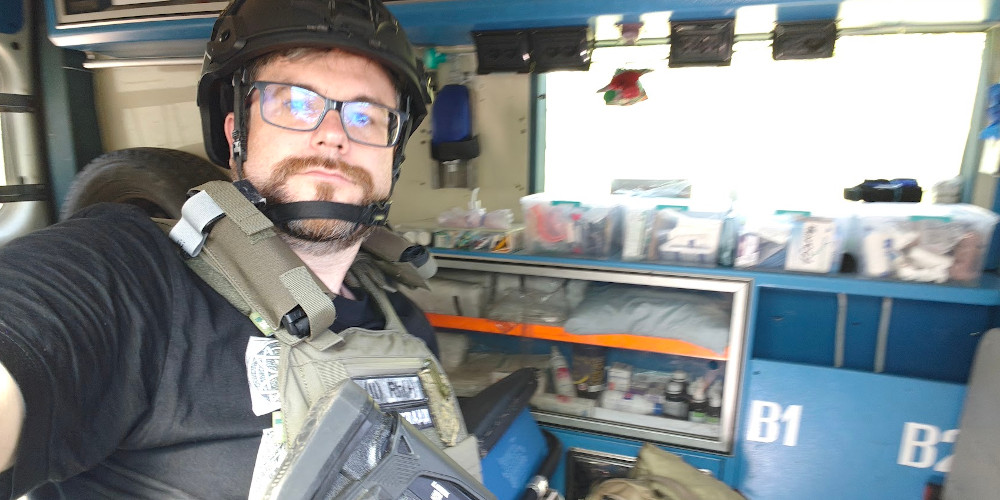
07 August 2026 – Sunflower Scotland’s chairman working with a paramedic team evacuating the wounded from the east Zaporizhzhia area. We stayed for a full rotation helping the team. We took the deep dive in the drone war zone in order to learn what equipment is missing, and what help is needed. Drones coming in waves in the morning and in the evening make medics’ work extremely dangerous.
Oleg Dmitriev, our chairman, joined a medical team whose job is to provide first aid and evacuate the wounded. Their work was in the area east of the Zaporizhzhia city, north of Komyshuvakha.
Ambulance in the fields of east Zaporizhzhia
The main roads in the area are controlled by Russian FPV drones. They track down vehicles and attack them. Moving around in the area should be done with extreme care. When driving, we often saw black silhouettes of burnt cars. For obvious reasons we didn’t stop to take photos.
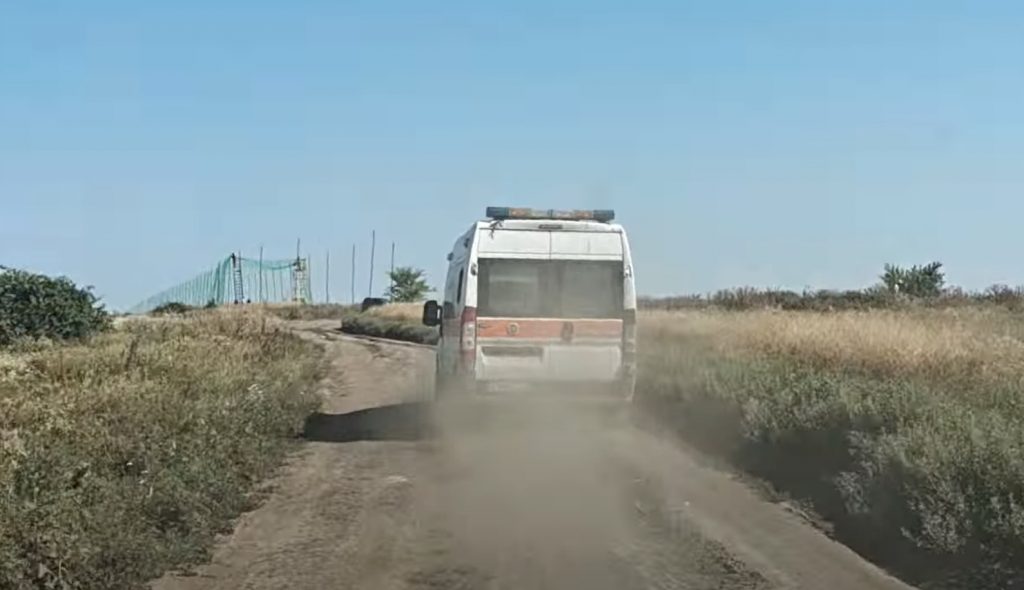
Some roads are covered with anti-drone nets. But they cover stretch over only a few kilometres. Villages and most roads are not protected.
The team consists of a paramedic, and an ambulance technician. Oleg’s role was to watch out for drones: use the drone detector, look and listen for any incoming drones, warn others. In the most critical situation try to shoot it down with a netgun or a shotgun.
Every time we would receive 2-4 wounded persons, and sometimes dead. First, the paramedics would provide first aid and treat the wounds. Repackage the old dried bandages, give an IV injection.
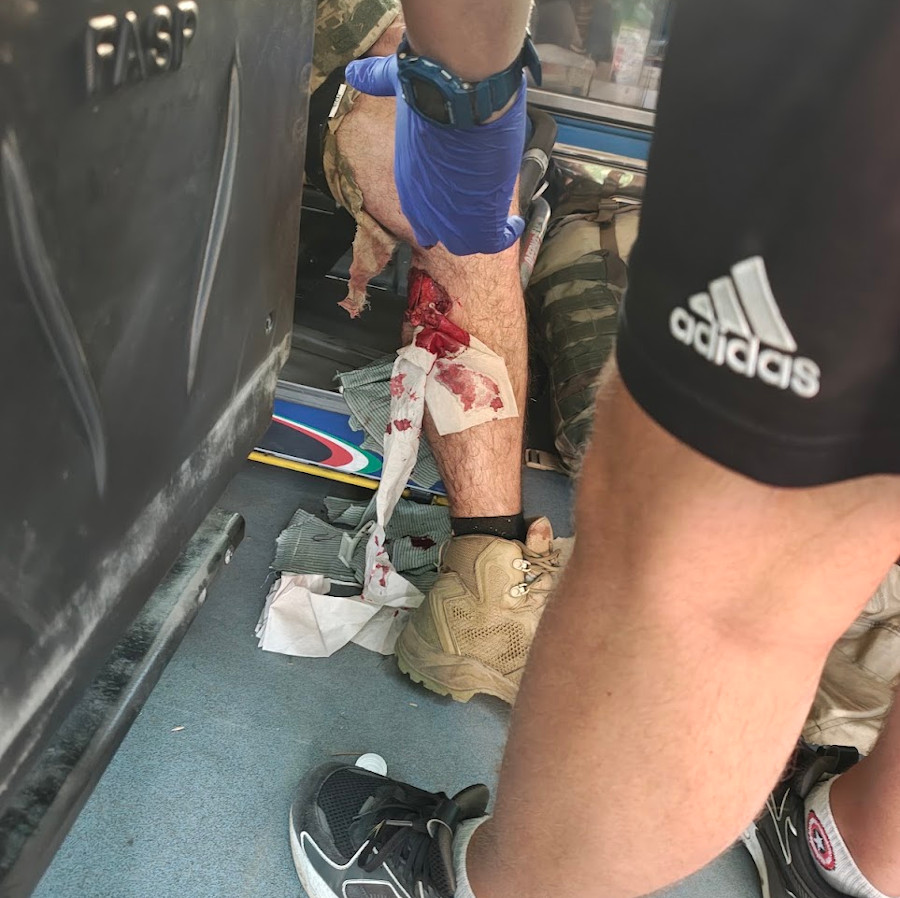
After that, we would board everyone at the back and drive to the hospital. The paramedic was looking after them and intervening when necessary – on a bumpy dirt road through the fields. Exactly like in the films about WWII. The only thing is, we were experiencing it in 2026.
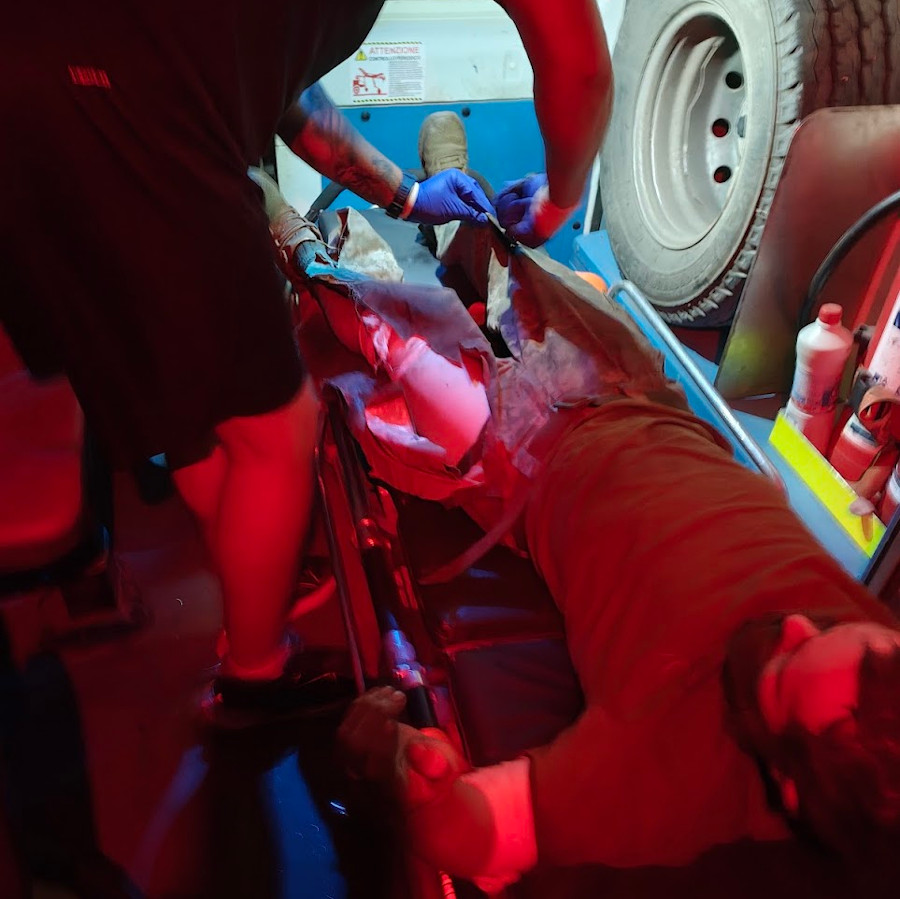
“Listen to the sky”
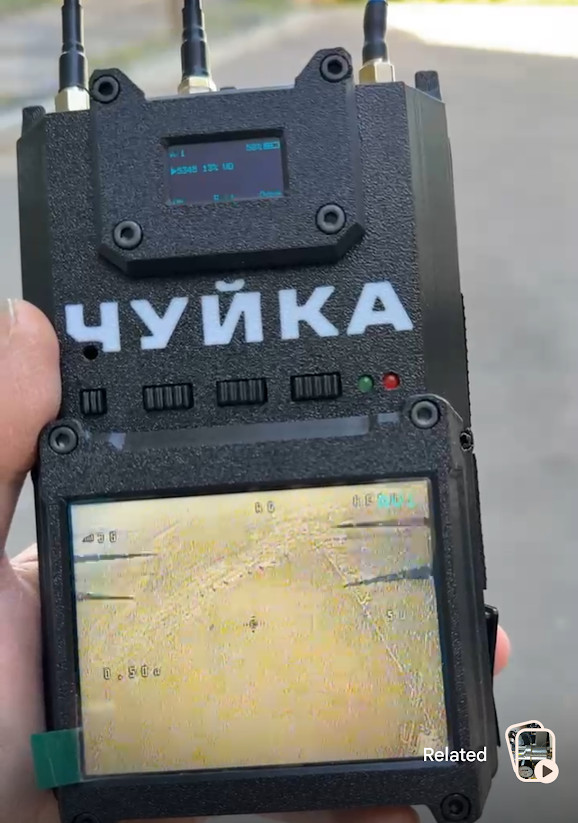
Ukrainian medics have to use drone detectors and observe the sky all the time. Not all drones can be detected because the Russians always change frequencies. Drones with fibre-optic cables cannot be detected by radio, you need to listen.
“Listen to the sky”, the guys told Oleg when they went on the first mission.
Medics can use anti-drone jammers (REB) to protect the ambulance. But when you switch on a jammer, all drones in the area will attack you: it’s a big red flag. And, jammers don’t protect against all drones: the ones with fibre optic cables are immune to jamming.
Learnings
Evacuation in 2-15 days. No “golden hour” evacuations. Tourniquet syndrome.
In field medicine, that aid should be provided immediately. Within the first hour, the person should be brough to a hospital. The Ukraie war has shown that it’s a pipe dream.
The wounded have to wait for days or weeks, until it is safe for them to be evacuated. Until that time, Ukrainian doctors send them bandages and painkillers, so they can drag on for as long as possible.
Over that time, wounds swell. Inflammation and sepsis is a real problem. Antibiotics help to an extent, but not always.
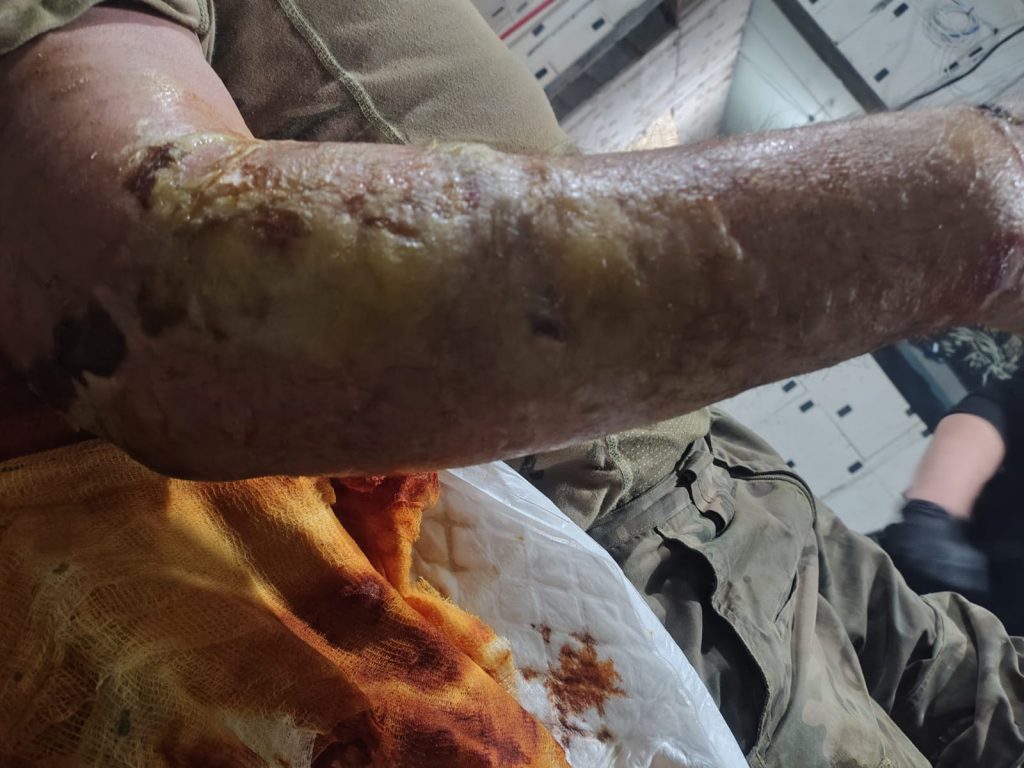
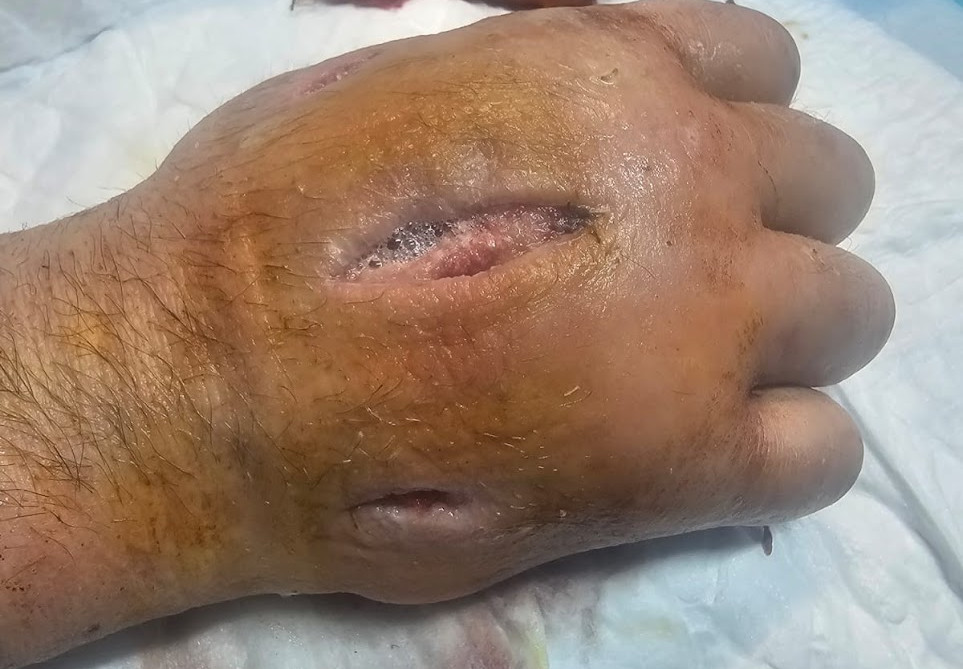
If a person had a tourniquet applied, it is often released and re-tightened – agonising pain. It’s done in order to prolong the onset of necrosis. Amputaiton is the most likely outcome.
If the wounded person still has legs, they are sent strong painkillers and crutches, so they can lipm back to the evacuaiton point. That’s why we always donate crutches to the medics (we don’t get involved with strong painkillers).
Land robots (NRK) at first were though of as a magic solution for evacuation. Until the drone people figured it out, and now any land robot carrying a wounded person is instantly attacked by drones. As a result, we heard that the wounded refuse to board the land robots. They prefer to crawl back on their own.
Ambulances are top-priority targets
We have seen a number of ambulances destroyed or damaged by Russian drones. The medical red cross and the ambulance bright marking is not a protection. It’s a signal for the drones to attack.
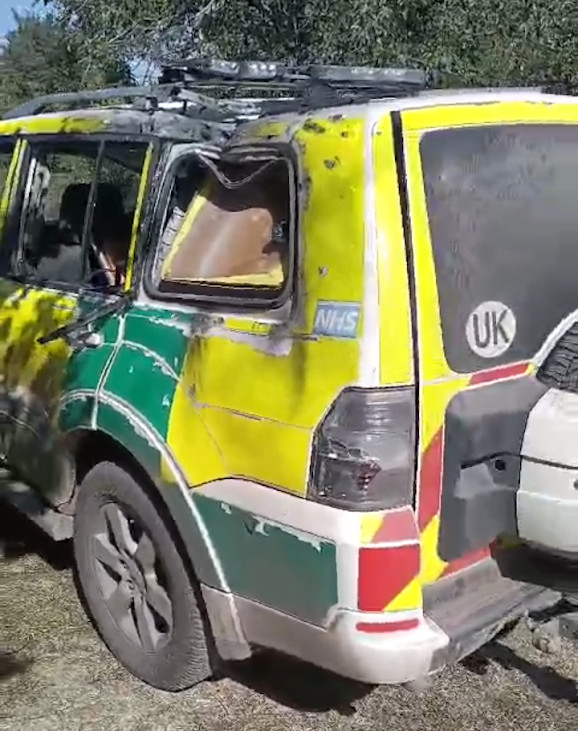
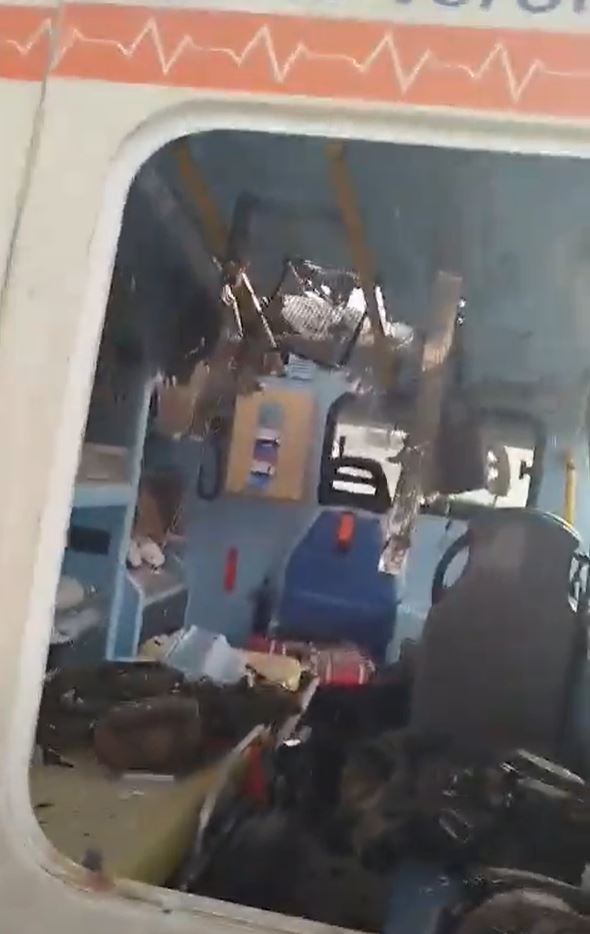
The medic’s work is extremely hard and dangerous. While providing first aid, you are being targeted with explosives.
Second-hand Ambulances: not fit for purpose, but that’s the best they have
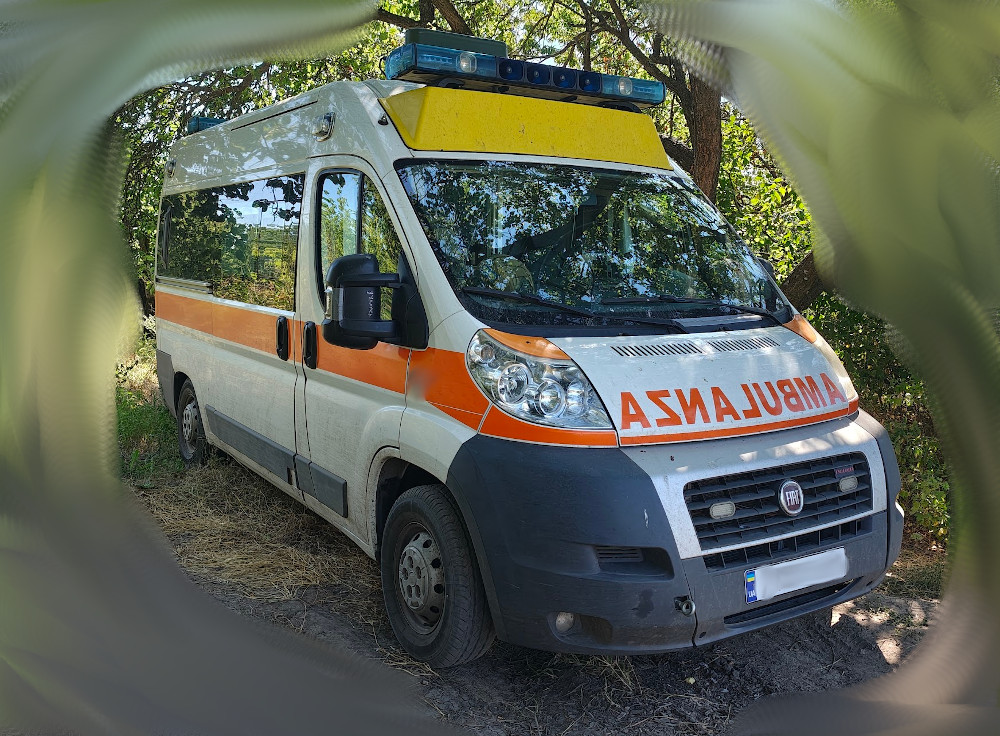
Medics are saving lives, and risking their own. European and UK charities have been giving Ukraine old, second-hand ambulances. As med evac vehicles, they are not really fit for purpose (explained below). But that’s the best Ukraine has right now.
Having said that, the old ambulances have some really necessary features:
- Designed for medics: with stretcher bed, lots of compartments for drugs and syringes.
- The rear cabin offers lots of space, a bed and foldind seats. It is very important to carry 3-4 wounded persons while providing first aid.
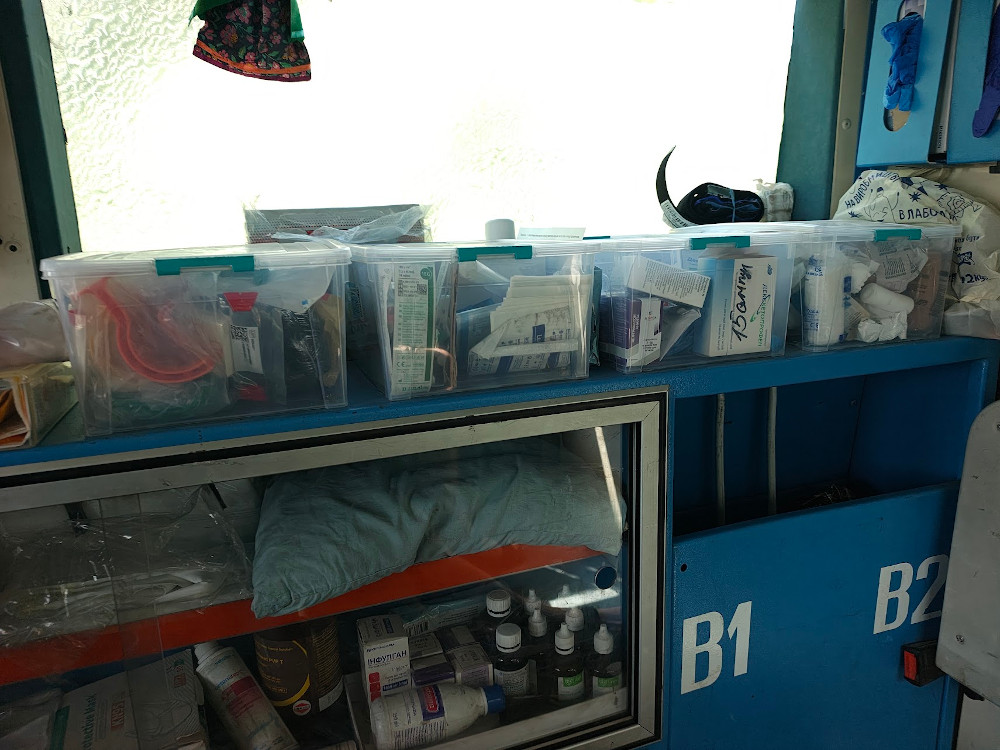
Now, why second-hand ambulances are not fit for purpose:
- Heavy, low-sitting vehicles. Buit for smooth European city roads. Easily get stuck on Ukraine’s dirt roads.
- No light and power at the back. Paramedics provide first aid with head torches. Why? In the ambulance service, you charge the rear battery from a special quick-release power supply. Not something that’s available in the fileds of Ukraine.
- No anti-drone protection. No armouring against drones. When working, paramedics are completely exposed.
Paramedics buy drone detectors, they fundraise and buy anti-drone jammers. They try to upgrade the ambulances and make them reay for the frontline use.
UKRAINIAN BOHDAN-2251
There are Ukrainian government-issues military ambulances “Bohdan-2251”: converted from Chinese “Great Wall” pickup.
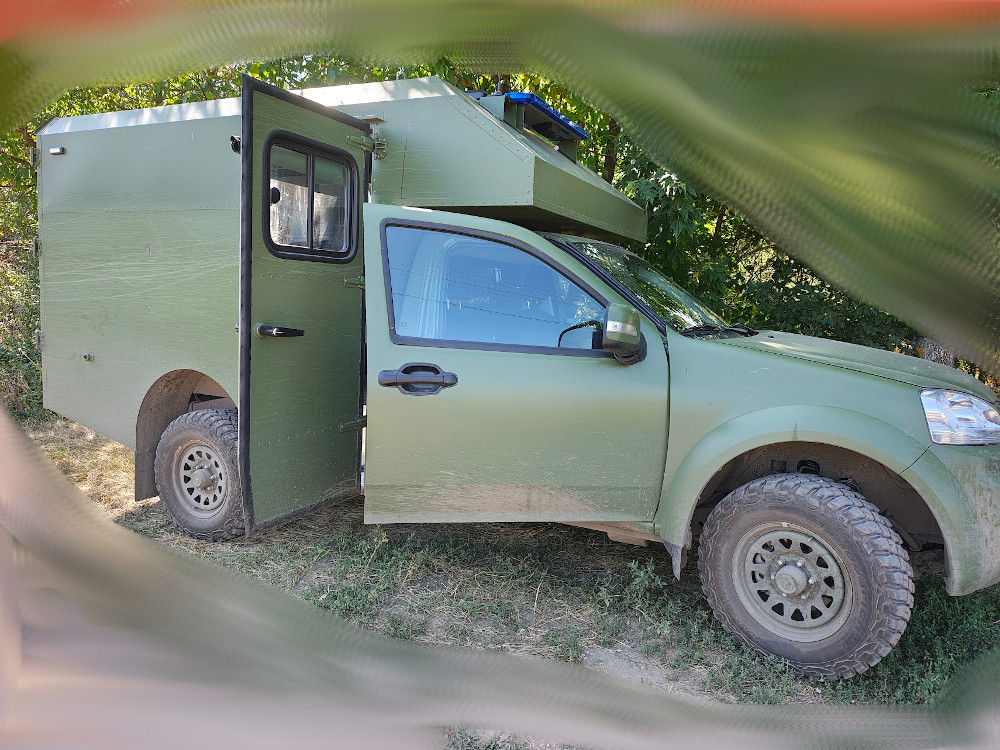
I’ve inspected one of those. Having worked with paramedics, my conclusion that Bohdan is too tight. You can fit two small men. It’s hard to take on board not one, but several wounded persons, which is what usually happens.
In case you need to provide first aid, Bohdan’s space is very constrained. Its medical compartment measures 2400mm long x 1750mm wide x 1500 high (UK ambulance’s medical bay is 3700mm long x 1870mm wide x 1930mm high). There is no worktop for preparing injections, and no built-in organisers for bandages and medicines.
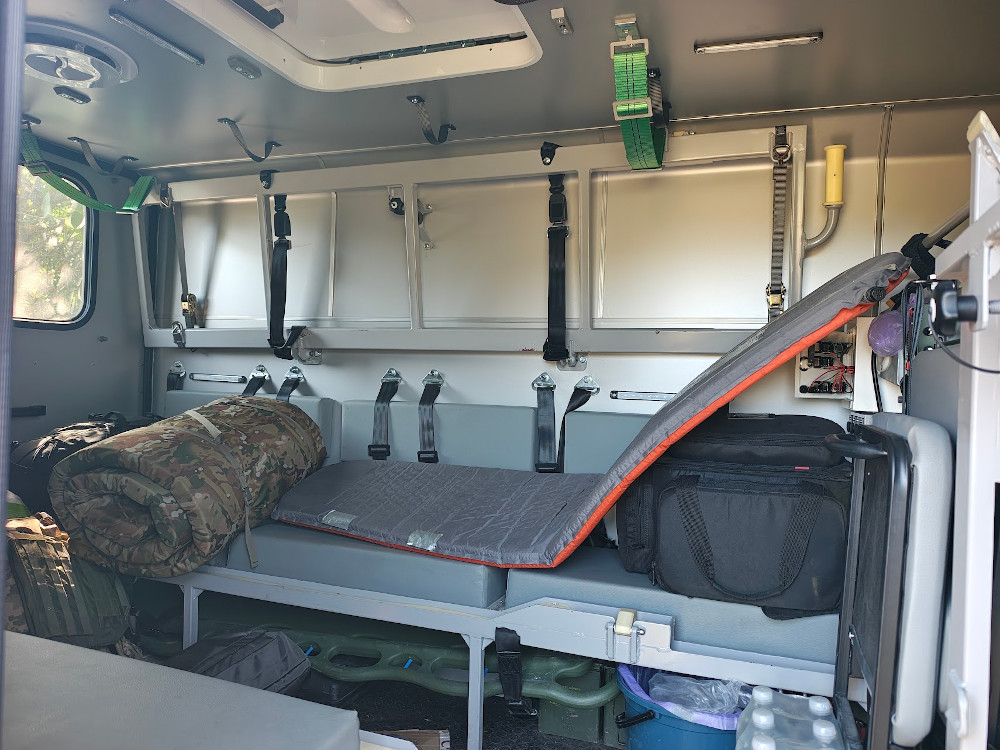
Finally, in terms of discreetness, Bohdans are visibly military vehicles. They have a distinct shape and army green paint. Russian drones can clearly see and target them. Now that they are using AI, drones can remember Bohdan’s shape and specifically target it.
To be fair, both second-hand ambulances and Bohdans are the medical workhorses which are savig hundreds of lives every day. Yes, they are not ideal. But they have taken us so far.
Going forward, we really need to stop and think: what type of ambulances do paramedics at the front really need, in order save lives while having a degree of protection themselves.
Shortage of ambulance and first aid supplies
We have seen that there’s a shortage of ambulance supplies. The most typical type of wounds is surface
- Cotton bandages
- Israeli bandage 4″
- Haemostatic bandages (for tamponade)
- 12g, 20g, 22g IV Catheters (Cannulae)
- 2, 5, 10, 20 ml syringes
- Burn dressings (large, 20×20, 20×45 cm or similar)
- Splints
- Paracetamol
- Cold and Flu sachets (e.g. Lemsip) and tablets (Sudafed, Strepsils)
If you can, please donate or help us buy them.
In addition, there are drugs which are needed. We will be buying them in Ukraine, in order to avoid cross-border checks:
- Non-steroidal anti-inflammatory drugs (NSAIDs): Meloxicam (much stronger than ibuprofen), Movalis (brand name of meloxicam)
- Wide spectrum antibiotics
We do not disclose everything. We keep the sensitive information, or the details which may make medic’s work more difficult.
Sunflower Scotland is making our own, 4×4 ambulances, and donates them to Ukrainian medics. Please support us.
Practucal and Affordable DYI Ambulance
Here’s what Sunflower Scotland thinks a practical and affordable DIY ambulance should be. Earlier we built two simpler versions and donated them to Ukraine. Now, thanks to our experience, we strated building a new version, Sunflower Ambulance Mk2.
Why building a DIY ambulance instead of bying a ramoured ambulance?
You need to replace hundreds of road ambulances, and do it ASAP. We don’t belive in buying expensive, perfect med evac vehicles. Why? Becuase (a) the expensive vehicles will be destroyed by drones as quickly as cheaper ones; (b) save money, use it wisely. One armoured ambulance costs £200-250,000. Instead, we can make 20-25 DIY ambulances for the price of a new one.
1. Ambulance Base: a used 4×4 van 2015 – 2016.
A used 4×4 or All-Wheel-Drive (AWD) van will be the most practical base. We can source VW Transporters, Ford Transit Custom or Mercedes Sprinter for £10-15k. These models are harder to get but it’s possible. Vans offer important advantages:
- Enough space for an ambualnce stretcher bed and 3-4 folding seats
- It looks like a civilian vehicle and does not attract too much attention
- Can be repaired in any garage – these are standard vans, not a uniquely built vehicles which costs an arm and a leg to repair.
2. Additional Equipment Inside
Inside the van, we will install
- Ambulance stretcher bed (£500 – 700)
- 2-4 Folding seats (£100 each)
- Organisers for medical tools (£200)
3. Practical Armour
Protecting a van all around with a high-class armour is very expensive (£30-50k). But most importantly, it makes the van extremely heavy. You need to modify the endigne and the suspension as well, which adds many thousands of pounds.
In reality, full armour is too expensive and it’s simply not required. Drones can destroy even a heavily armoured vehicle, like a tank. No armour gives a 100% protection. We don’t need to make tank-ambulances.
We have seen that most drones hit ambulances on the roof. For this reason we will follow the 80-20 rule and only place armour sheets on the roof. It may protect our DIY ambulance from 80% of the cases. We just need to be realistic that we are not trying to guarantee a 100% protection, which is not possible anyway.
Armour sheets on the roof is a cost-effective solution. It is much lighter than a fully armour capsule, and does not require expensive modifications of the vehicle.
Total cost
Our target budget is £15k.
Please follow our reports and support
Thank you. We have already started and will be updating you about our progress. We really appreciate all support, and thank every donor who is helping us to help Ukraine. Thank you very much!
0 Comments for “Evacuation of the wounded in the Zaporizhzia region”